Oct 28
La Casa/Latino Cultural Center
-
Our undergraduate minor introduces students to the nation’s diverse Latinx populations and pairs well with many majors. Ph.D. students may complement their doctoral program by developing expertise in the interdisciplinary and intersectional field of Latinx studies.
Our courses examine contemporary and historical issues of Latinx communities from a variety of perspectives, including art, music, sociology, law, gender studies, media, education, literature, and more. We pair rigorous disciplinary training with interdisciplinary research methods that more accurately explain the complexity of Latinx peoples.
The Luis Dávila Essay Undergradtuate and Graduate Competition: Congratulations to this year winners, Fátima Umaña Escobar (Graduate Student), Natalia Brondo-Peña (Undergraduate Student), Yané Sanchez Lopez (Honorable Mention). Learn more
Oct 28
La Casa/Latino Cultural Center
-
Oct 29
Good Manners/As Boas Maneiras Film Screening
La Casa/Latino Cultural Center
-
Nov 13
Nov 14

Let’s celebrate the 50th Anniversary of Chiricú
This semester, Latino Studies and our growing community look forward to strengthening our intellectual, artistic, and affective worlds together. This new academic year offers us an exciting opportunity celebrate and honor the people, communities, ideas, and struggles that have made the program’s continued growth and vitality possible.
Thanks to the outstanding leadership of our director, Solimar Otero (currently on leave); the rich course offerings and attentive mentorship of our core faculty; and the vibrant research, teaching, and intellectual community fostered by our affiliate faculty, Latino Studies continues to thrive. We are especially delighted to announce that the number of students pursuing the Latino Studies minor doubled during the last academic year! This remarkable growth gives us much to celebrate. This fall, we will honor the individuals, organizations, students, faculty, and community members whose work has made possible the creation and flourishing of Latino Studies at IU.
We are marking this important milestone with a carefully curated and especially festive Latinx Heritage Month. Among its highlights will be the Chiricú Journal Symposium, which celebrates the 50th anniversary of Chiricú and its extraordinary history of Latinx intellectual and cultural production. The symposium will bring together important transgenerational and transnational voices, including Norma Alarcón, the foundational Chicana scholar, activist, and publisher, who returns to IU, her alma mater, as well as exciting contemporary academic and literary voices such as Latinx writer Edgar Gómez. La Casa’s Book Club will also host a conversation about Gómez’s latest book, Alligator Tears.
And there will be plenty of movement and music! Punchy and musical co-sponsored First Thursdays’ events await us on the main stage. Stay tuned for Bad Bunny Pilates, led by Sabrina Montiel, and a performance by Tipa Tipo , whose music brings together soft rock, disco, and Latin rhythms. Continuing in this musical spirit, Latino Studies is partnering with the Latin American Music Center to host talks, class presentations, and performances by Afro-Indigenous researcher and musician Yanna. Please visit our events page for dates, locations, and additional details.
Lastly, Latino Studies would like to celebrate the many accomplishments of our core and affiliate faculty, students, alumni, and broader Latino Studies community. Keep an eye out for book talks, presentations, performances, conversations, and other gatherings.
Sign up for our monthly Newsletter here. Follow us on Instagram @latinostudies_iu
Olga Rodríguez-Ulloa
Interim Director, Latino Studies Program
Our faculty come from wide-ranging fields and are experts in topics affecting Latinxs, including issues of race, immigration, citizenship, voting rights, Afro-Latinidad, performance, art, and aesthetics. Our program values this work because it better helps us understand our world, and produces a richer, more comprehensive account of its complexity.
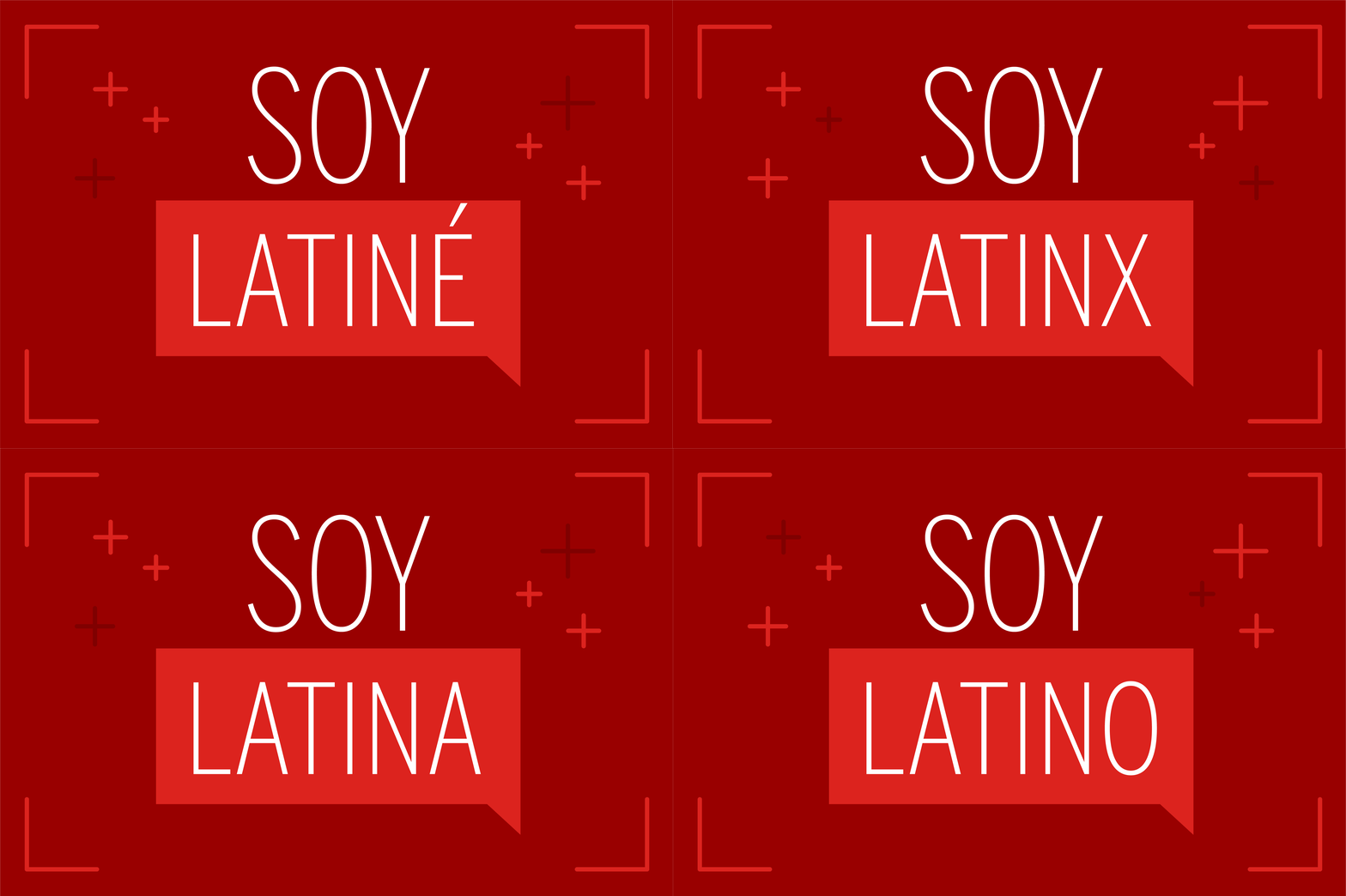
When the Latino Studies Program was founded in 1999, our program’s name emerged from that historical moment, one rife with possibility for new understandings of our constituent populations. Since then, our field has evolved in rich and complex ways, demonstrating the multiplicity of experiences referenced by the term “Latino.” We retain the name “Latino Studies Program” while acknowledging the deficits of such a label and acutely aware of the multiplicity of experience encompassed within configurations of Latinx.
 The College of Arts